my absentee months

i. finished conversations
P: I — I don’t see you jamming with us very often.
C: I just feel, like, I don’t know. I feel like whenever I jam, I’m searching for something in it.
C: …But, when you do it, you’re just doing it. I admire that. I don’t think I can do that.
P: Well, I don’t know. You shouldn’t shut yourself off from it, you’re still a valuable contribution —
Elsewhere:
Y: I just don’t think that lamictal is helping me. At all.
X: Really? Well, it worked great for me.
Y: Well — I don’t know. Maybe I’m misattributing hypomania to what’s actually a normal amount of energy to have. Maybe it is doing its job.
Y: …I don’t know.
X: God. Stop with that word, hypomania, I’m so sick of it! The compromise of it all! Such a modern suspicion of extremes, of proper mania, affliction, stop it! Stop boring me! Just why people say weirdo when they mean spirited — be decisive. As if it all has to be so, so nuanced, man.
Y: …Come on.
X: But I didn’t actually say all that. Instead, I was silent.
ii. various means of getting off
February was much in keeping with October; as I ended my employment in the Autumn, so I resumed it in the Winter, disconcertingly, with much of the same restless feeling. I had been involved with many women before my period of joblessness began, and they had spun me out: so I spent months ruthlessly attempting to whittle a new arc in my decision-making, to break entirely with that old, just to realize the shape of such an arc had curled roughly into a circle. Only, I can now recall that I know a woman who reaches orgasm (or some heighty analogue of it) simply by playing music with other people. She described it to me, in words so level and unpretentious, as a sensation of full-body euphoria — perhaps it was I who recognized arousal in this — this, resultant of the improvisational dynamism present in what she referred to as a “jam session,” the act of “jamming.” Interplay, with friends and strangers alike — so, I was jealous. I hardly ever sleep with strangers, not so much as I imagine my more honest counterpart might, and my own affliction of writing — as I have often remarked — shares most in common with masturbation (or, at most, a sort of time-delayed exhibitionism): it is an asocial and private act, which in my doing I attempt to remove from the context all distractions and social trappings, these I imagine as diluting my pensive efforts. In this conversation with her, then, I attempted to amend the apparent travesty: “a writer cannot be sedentary, either, they cannot be cooped up in their room.” So I say. If one were, then what could there be to write of? There is little to till in home-bound pacing. I was drunkenly stumbling along what I then imagined this thread to be: a sort of real heady thought process; my half-addressed conclusion to it was that to write at all must be irreconcilable with a life lived flat, and boring, and narratively shut. I blabbered about this in words less well-dressed, searching for any prying ears at the party, anybody who could stand witness to my newborn and vindicating insights. But I found no-one. She left this conversation— which took place months ago, now — satisfied, and I myself left it sullenly, insecure in my own escapades, wherever they were still allowed to continue. So it was: there are so few things which I can curiously smash up, at the moment.
As well in this time of unemployment, in which I was, remarkably, so-vigorously re-fashioning my personal cosmology (a project which had been made necessary), I met another woman, she who was fascinated by nuclear disaster — and the severe and inevitable logic therein — once the process of its chain-reaction begins unmitigated, it does not cease, and it catches fire in strict accordance with physics. I found a thin relief in this inevitability, as these laws meant nothing could be my fault, and as well I found a macabre sort of excitement in it — is it not exhilarating that we could set to work something so entirely destructive as that? — that which rips apart the sky in milliseconds, cracking-up even the most basic texture of all its surroundings. The inciting, imperceptible milliseconds were most titillating to me; it is only a trifle that we might suffer their fallout for years after. In those initial moments, who could dare think of a death so casual and lengthy? Of the sexless radioactive rain, wind. I listened as this woman explained the processes which she seemed to understand well, me considering her own self-awareness among it all to be so calm and so informed, yet, I was incensed to narcissistically imagine myself torn apart in the blast. It seemed impossible that I might be struck by the drawl of the slow death — though, I would then always go on with the rest of my day. And months after I met this woman, a friend of mine would instruct: contentedness with boredom is the marking of an achieved adulthood; so, valuing her advice, in a stark self-betrayal I decided I must be able to live with this slow-burning cancer of pedestrian life. I must be able to ignore the irreconcilable prospect of such monotony being wrought by what once was ecstatic enough to be, colloquially, the Bomb. I could allow myself to die of cancer. This remained on my mind, such that: at a point of refraction, I quivered, I broke; where I could have again ran, I instead remained timid within the outskirts of that great affair of women which had laid waste to me. I reached no escape velocity. There was no breaking with that old. None of those things I had sought, and so, there came the attrition. Early in the months of my unemployment — which the heaving emotional weight of this great affair had set me to — I laid aside my coursework and even the nauseating thought of responsibility at all; it seemed I was then moving, uncertainly, but I was moving. I would wake up early every morning as, without fail, the roadwork outside her window began: the street was turned inside-out with jackhammers as its very terrain was made inverted and inhospitable, then laid with new piping by the City, and at last this prolapse was summarily flattened and repaved — we would not be able to recall the work even just weeks later, it was as though the effort had never been exerted. I think my hair looked better then, too: this nuke-bound woman had an expensive (not too expensive) brand of conditioner which I would frequently borrow when I stayed with her. For my part now, I cannot conscience such a purchase in my own home, not on my present budget. Though for all its poverty, I do still miss being out of work.
I now as well recall another woman from that time, one who believes herself to have discovered some pernicious secret of writing, a secret which she tries breathlessly to keep from me — her selfless incantation, I cannot have you falter like I have faltered. I do not pester her to betray herself and divulge it — or, perhaps, it is that this secret’s supposed ruinous properties do in-fact bother me enough — though I have considered its possibility so much to imagine it adjacent to the notion: there is no universal truth to be found through writing. Whatever similar realization of hers, it had felled her academically — and she, now a college dropout, informs that it will fell me as well. I wonder if I might be invulnerable, as I find myself helplessly addicted: not so much caught up in the routines of discovery and research, not anymore in this project, but I instead recognize such things can come only by accident or by hapless byproduct. I desperately endure that undulating and comedown feeling of what I know to be the writing process: there are no real ends to be sought when dealing in personal essayism, or any other sort of fiction, only questions which can posture themselves as a sort of answer. I go about nearly nothing. In this thought, I suddenly elected to continue in conversation with the jam-orgasm woman. I had at last brought the ideologies of jamming and writing to a single point, and I had freed myself from the perception of being insular, and slovenly. And some time later, I re-initiated, by presenting her with my theory: the personal essay does, in fact, share space with the jam session: both carry on to just about nowhere; both concern the greater half of their content-by-weight with heavy stylization; and not so much regard for a firm plot nor message; they are high questions and bother little with (concrete) answers, only their statuesque forms. So, to both there comes a stiffness when one imagines there to be truth, or a secret, found beneath the unwelcoming stubble of their unabashed meandering — and thus, this stiffness imposes a grotesquely static, prescriptivist slant onto what is otherwise content in this very same “meandering,” and otherwise aimlessness. The jam-orgasm woman is confused by my sudden outburst, as she does not remember our original conversation, the one which had bothered me so. To the academically-felled woman, I have yet to relay my prior findings: they feel cruel, somehow.
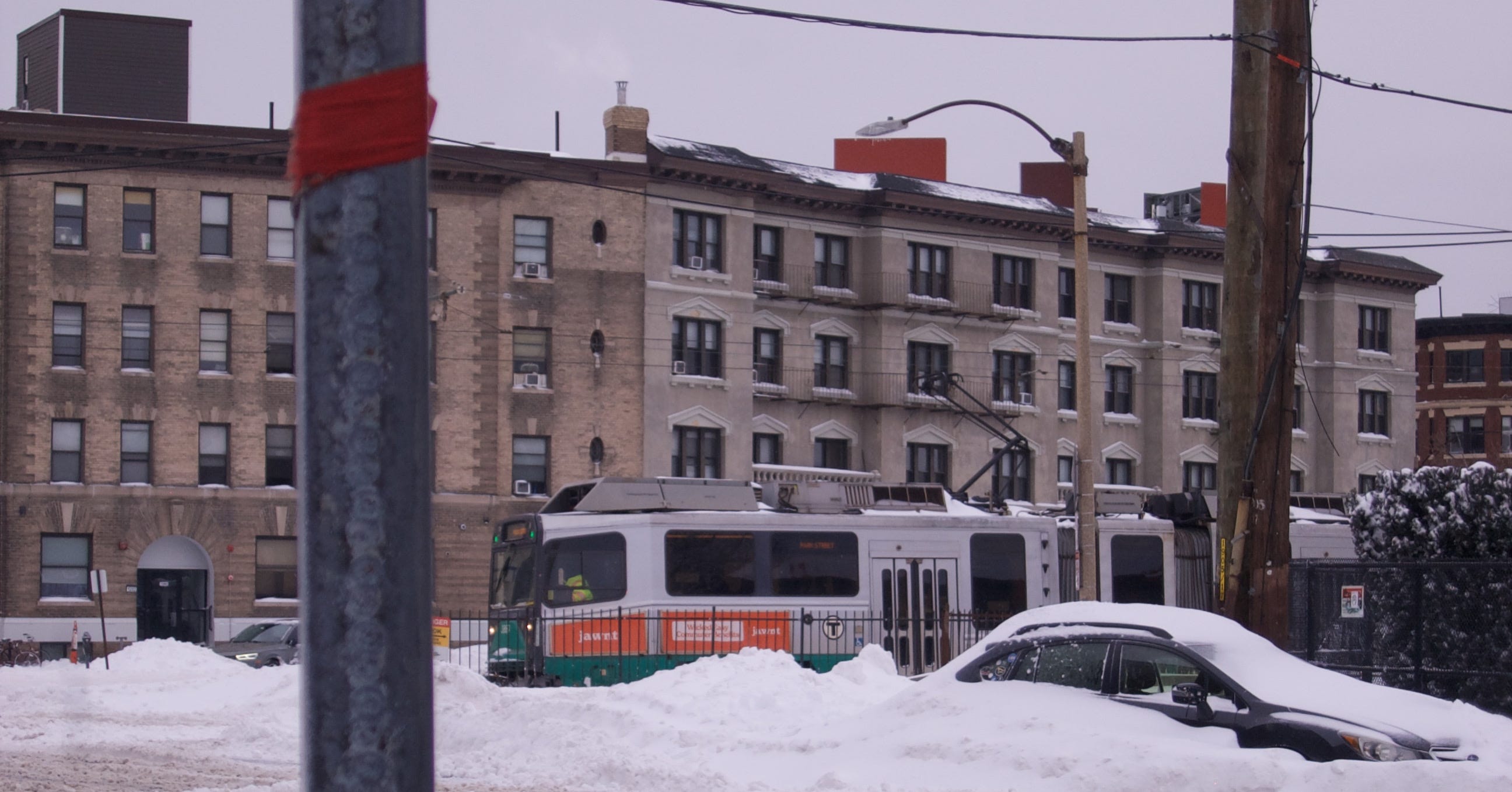
With the helpless and flailing self-awareness of a twenty-one-year-old, I do try to live more slowly, in what smells alarmingly like deflation. I try to let myself be bored, and aspire for that contented and productive self-awareness of an older age. To the great affair of women, women who tell me things, I returned again to the core of. And fashioned from certain corners a relationship; and I sealed it as such by transfiguring my room into a shared space for us all. I rid myself of half its rent payments, then its bedframe, mattress, and any other possession I could lay an inarguable claim to — my bedroom was then refilled following this period of barrenness, and I rendered in it a living room for our wobbling ménage a trois, by my own design. But I am still content to long. I miss longing. I miss imagining love as unrequited. Or I miss love’s punishments. I would, at one point, listen to Leonard Cohen’s Iodine, and consider the unending lifetime consequences of nuclear poisoning, alluded to in his metaphor, the ones I was once taught. Though I now know the poison as more similar in style to his later song, in which Cohen recounts what she said: “the art of longing’s over and it’s never coming back.” We cannot escape such shadows, only record them, restyle them, and then pray for the worst to befall us so that some frightened adrenaline might once again be urged to rush through our veins. — Or? the far-flung capitulation of settling down? — it could be nice, actually, but not here, not now, I surmise. Not on such unsteady grounds as a twenty-something-social-scene. And what would there be left to write about? Beyond the space of my apartment, as I am in transit to its orbiting corner store, I see a man in the frigid and snow-tossed cold. He has a microphone plugged into a portable speaker, and he is preaching to the few still stomping their feet through the whipping centigrade of Winter. He says, again and again: “You claim to love Jesus with your lips, but your heart is far away! You claim to love Jesus with your lips, but your heart is far away!” In an indulgent vein, to this I imagine sucking cock. And I puzzle for some time over exactly which woman’s cock it is that I am sucking, in my conjured image.
iii. the new boston
To ride the subway in Boston is sometimes not to ride a subway at all. Last Spring, in another lulling and drowsy period of my life, my commute was damned by a days-long track repair closure to instead amble across the surface, carried by demeaning and bright-yellow charter buses. Electronic marquees along their front, back, and sides, read: “EXPRESS,” a cruel joke played on us commuters: we know these buses are actually far slower than the trains. And from them, caught up in standstill traffic, we were made to see a landscape of silver and quirky buildings, this outgrowth all along the Turnpike, each façade vainly attempting to assert an imagined unique temperament; yet within their leased walls, it is only a world of axe throwing centers and lab space which stretches out to the North End, to be met coldly with more of their ilk and — the Zakim Bridge. I had long been disparaging of the Bridge, which is so uncharismatic in its desperation to align as a local landmark, and as well the environs it is consigned to — though my academically-felled woman (who was not as such back then), a Boston native herself, insisted that I did not understand the Bridge’s significance. “It was a new epoch,” she asserted to me as we sat together on the charter bus, “when the highways finally went under, and the Bridge finally opened...” She spoke of Boston’s “Big Dig” “megaproject” — in which all of Interstate 93’s Central Artery was translated from a hulking overpass bisecting downtown, to a system of always-disrepaired tunnels beneath an arcing public park — I was familiar with the local infrastructure, of course, though I still allowed her to recount its disposition. Once she was certain the scene had been adequately set, all its cutlery and dressing so neatly laid out, she delighted herself in tearing the tablecloth out from in front of me and letting it all clatter down. She fumbled her own storytelling, and chided: I still could not possibly understand its gravity, its scope, what the Bridge truly meant to people like her. “You just had to be there. It is a symbol of the New Boston.” Bemused, I looked from the charter bus’ dirtied windows and at the nearby glass compound in which North Station, also rebuilt as part of the “Big Dig,” is housed. In it, there is a Starbucks, a Blank Street Coffee, a Star Market, an AMC, the former location of a Tasty Burger, at least two upscale pub-styled restaurants, multiple memorabilia shops, a robust set of fare gates for the Commuter Rail and Amtrak (which would later rolled out in train stations across the entire City); it is as well where the Boston Celtics play, and sell their merchandise. She continued, “Maybe it’s not a Good Boston. But it is certainly the one we all live in.” Oppositional, I countered, “Well it has to be a symbol of Boston, it’s right there. What else could it be?” And so we were distracted for a moment: I can tell, for this whole conversation, she has wanted me to lay my head on her shoulder. It is not going to happen for some time.
A section of poorly-laid brick juts out from the wide path set before the Community College; on my supposedly doomed trajectory I see visions of myself tripping on it, but I do not. Such disasters are always averted now. Thoughts about their incoming arrive and depart in one gliding motion, with such little resistance in any direction: a once-encompassing fatalism has withered and now elects only shallow amusement, I mean, what if I did fall? Or what if I slipped on ice, and the glass bottles of soda I am carrying shattered into my neck? Such excitement refuses to abound. While entering the building, I lift one hand from my coat pocket and into the front of my purse, feeling for my wallet in anticipation of a fare gate of some kind, these are everywhere now — though not here — and this transaction is aborted at the phantom turnstiles by a man, he who holds open the door in a motion which does not actually hold open the door: instead, he throws it open just enough so that it only closes after I have already staggered through, at roughly his same pace. He does not even stop, he hardly even glances back at me from behind his tacky plastic sunglasses, which have been cut by a machine to resemble the number two-thousand-twenty-six. So absent the chivalrous exchange, I wear on, simply a bit disappointed; he has not even done enough for me to consider the smell of his cock. Rather, I remember that it has been weeks since the New Year began, and I think quickly to disparage him for still wearing those sunglasses. But he says nothing, and I say nothing. It will be an hour and thirty minutes before I next pay at a fare gate. It will cost two dollars and forty cents.
iv. vertigo
In the latter half of my unemployment, I was recovering from a total and days-long episode of vertigo — fittingly, after the former season, in which I had gratuitously used the word “vertiginous” to describe my station in the great affair of women — one which had put me in the Emergency Room under the unceremonious banner of a “spinning sensation” diagnosis; hardly accounting for any of it in that banally simple description. After all, had I not been — mere hours prior to triage — on my knees before a toilet bowl begging for it, whatever it was, to stop, stop, please God stop? Had it not at last unraveled my entire body? — oh, and if only sex could ever feel like this, so total in its affliction, am I not resolute enough in my desire to deserve that? — And was I not, at this juncture in the cascading cerebral disaster, pitiably reduced from standing upon two feet to only a wailing and collapsed heap, this all due to what a doctor would later describe as a “misalignment of crystals” within the ears? Crystals, in my ears. I could not believe it. I was unsure I had heard her correctly the first time — so new-age and magical, this must not be a real doctor, my friend has taken me to a fake hospital — yet she repeats her diagnosis. These crystals do exist — and what other hidden organ in my body was waiting to fail next? “This episode aside, you are the picture of health,” another doctor would say, as if he heard me ask. Life is too boring, and organs trundle on. Adulthood is coming to terms with this, I recall — no, another friend tells me that this conceit is entirely retrograde, and that consenting to boredom is an awful thought altogether, discouraging of an ecstatic and true life — wherever that is! In my masochistic whimpering, in a moment where I could hardly raise myself enough to lodge a vocal complaint against the doctors and their descriptions of “illness” — no! this is not an illness, this is something else entirely — I could not help the turning of two invasive thoughts across my mind. The first: I needed to tear the IV needle from my arm, the one which seemed only to pump the cold into my veins, though the doctors had said it would replenish all that I had so-exhaustively regurgitated earlier. Knowing better, though I writhed impotently all the same. The second: I thought that, in all the footage I had seen of a pre-9/11 New York City, those towers were just aching to crumble. In memory, they were teasing me, and who could blame anyone for bringing them down? Every camera demonstrations, every tourist’s recording, every film which ever hung a shot on their façades was simply contributing to decades worth of foreshadowing, one long and uninterrupted compilation of 9/11 Terrorist Attack Footage. Just the fact they had fallen meant that they always were falling. And I was always laying on that stretcher.
Thus, I am a woman who wears her jeans until they die, as they are meant to, and I was certain that I could derail my life by simple inaction; I am a woman who is a carve-out special economic zone for all those who know me, and I was certain that I could never actually commit to such ruinous inaction. Yet I idly wait for churning controversy to again reintroduce itself. So they were, the final days of my unemployment, empty days possessed only by their dearth of free time and air, and waiting, swaying in the wind with all their unnecessary height. Absent any excitement, I elected for the uninterestingly incendiary: I blew up these quivering days with drugs and alcohol, spending most of this unwilling stasis heavy under the pressures of ignorance and dissolution — going about nearly nothing — because I could, sure, yes. In that time the world persisted on its bleak flailings; old buildings were demolished to clear ground for silver new five-over-one developments; I nearly broke my only pair of glasses in a stupor. I recalled the nuke-bound woman, and a moment which I was told was deeply beautiful, and would be remembered for life: which impelled me to appropriate that present importance for myself: it was November, and I had asked no-one in particular for snow — moments later, the first flakes of the Winter fell, and I announced that I had gotten my wish. I got my wish. And I kept getting it. In the final days of my unemployment, a blizzard swept through the City, and afterward I watched from my window as sidewalks and crosswalks and bike lanes and other fields of pavement were again slowly negotiated from the briefly alien, center-of-the-street-strolling landscape; Boston eventually returned. Hey, one of the women told me, I went to 7-Eleven for you. I trudged through all that. I even dodged the street-corner preacher. She concluded: the least you can do is open the door for me when I’m back. Her face contorted plaintiff. But I was too bored, I could not even get up. How could I explain: It was all a dreadful waste.